![[Market Research Reports] – Research Google News Blog | VMR.Biz](https://www.vmr.biz/wp-content/uploads/2022/12/logo-removebg-preview.png)
The $20.79 Billion Pivot: How Sustainability and Innovation are Rewriting the Rules of the Leather Chemicals Market
Premium Insights
The global leather industry is currently navigating its most precarious and profitable transition in a century. For decades, the leather chemicals market—the engine room of the tanning industry—was defined by volume: more hides, more shoes, more chrome. Today, that equation is obsolete. As we move through 2025, the market is no longer driven by volume, but by value, verification, and virtue.
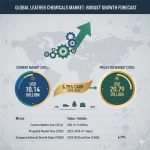
Stakeholders in the chemical supply chain are facing a stark reality: adapt to the new “Green Constitution” of the industry or risk obsolescence. The numbers back this shift. According to the latest intelligence from Vantage Market Research, the Leather Chemicals Market has already reached a valuation of USD 10.14 Billion in 2024. But the real story lies in the trajectory. By 2035, this market is projected to surge to USD 20.79 Billion, growing at a robust CAGR of 6.75%.
This isn’t just organic growth; it is a structural revolution. For chemical suppliers, tanneries, and investors, understanding the granular drivers of this $10 billion opportunity is not optional—it is critical for survival.
Visit Vantage Market Research to download the sample and view the full table of contents:- Request Sample Report – Leather Chemicals Market 2025
The Great Decoupling: Why “Green” is the New Gold Standard
The single biggest driver of this market expansion is the premiumization of chemistry. Brands are no longer just buying tanning agents; they are buying insurance against reputational risk.
Historically, chemical costs were a fraction of the leather production bill. Today, tanneries are prioritizing high-performance, bio-based, and ZDHC-compliant chemicals that command significantly higher price points. The shift from “cost-effective” to “compliance-effective” is fueling revenue growth even in regions where leather volume is stagnant.
The “Green Premium” in Action
Leading chemical suppliers are restructuring their portfolios to eliminate fossil-fuel dependence. Innovations like Stahl’s NuVera® and TFL’s Pure Tec are utilizing renewable carbon from biomass—plant sugars, vegetable oils, and waste streams—to create finishing agents that perform on par with petrochemical incumbents.
These aren’t niche experiments. They are becoming the baseline requirement for supplying luxury conglomerates like LVMH and Kering, who have set aggressive targets for 2025 and 2030 regarding raw material traceability and environmental impact.
The Cost vs. Value Equation in 2025
Feature
Traditional Chemical Input
Modern “Green” Chemical Input
Base Cost
Low (Commodity Pricing)
High (Premium Pricing)
Effluent Cost
High (Heavy treatment required)
Low (Biodegradable/Enzymatic)
Brand Risk
High (ZDHC/REACH violations)
Zero (Certified Compliance)
Market Access
Limited (Domestic/Low-end)
Global (EU/US Premium Markets)
Our comprehensive report details exactly which chemical segments are witnessing the highest price elasticity and where the “green premium” is most readily accepted by buyers.
Buy this Premium Research Report | Immediate Delivery @ https://www.vantagemarketresearch.com/leather-chemicals-market-2188/checkout
The Automotive Battlefield: Leather vs. The World
If fashion is the heart of the leather industry, the automotive sector is its wallet. The demand for premium automotive upholstery remains the most significant value driver for leather chemicals. However, this sector is a battlefield.
As electric vehicles (EVs) redefine the driving experience, the interior has become a “third living space.” This demands leather that is silent (anti-squeak), lightweight (for EV range), and hyper-durable. This specific set of demands is skyrocketing the consumption of Polycarbonate Diols (PCDs) and high-performance Polyurethane Dispersions (PUDs).
The Synthetic Threat: The leather chemicals market is not growing in a vacuum. It is in a direct dogfight with the Synthetic Leather Market, which is projected to reach USD 111.1 Billion by 2032. Automakers like Tesla and BMW are increasingly adopting “vegan” interiors.
To compete, the leather industry must prove its sustainability credentials. This requires a massive influx of “enabling chemicals”—preservatives that don’t require salt, tanning agents that are metal-free, and finishes that are 100% bio-based. Our research report provides a comparative analysis of the growth rates between genuine leather chemicals and the synthetic leather sector, helping you identify where to place your R&D bets.
The Regulatory Tsunami: A “License to Operate”
Regulation is no longer a hurdle; it is the primary market shaper. The European Green Deal and the Chemical Strategy for Sustainability (CSS) are rewriting the chemical menu for the entire world.
- PFAS “Forever Chemicals”: The looming ban on per- and polyfluoroalkyl substances (PFAS) is forcing a total reformulation of water-repellent finishes. Suppliers who have mastered C0 (fluorine-free) technology are seizing market share from those still relying on C6 chemistries.
- EU Deforestation Regulation (EUDR): Slated for full impact by 2025, the EUDR requires absolute traceability. This is creating a new niche market for chemical taggants and markers that travel with the hide from the slaughterhouse to the showroom, linking the physical material to its digital passport.
The Vantage Market Research report (Code: 2188) offers a deep dive into these regulatory frameworks, offering a timeline of implementation and an impact assessment for key chemical classes including Chromium VI, Bisphenols, and NMP.
Regional Power Dynamics: Asia’s Volume vs. Europe’s Innovation
The geography of the leather chemicals market is heavily skewed. Asia Pacific currently commands over 55% of the total revenue share. This dominance is fueled by the massive manufacturing clusters in China, India, and Vietnam.
However, the nature of this dominance is changing. China’s 14th Five-Year Plan has instigated a ruthless consolidation of the tanning industry. Small, polluting family tanneries are being shuttered, replaced by mega-industrial parks with centralized effluent treatment. These modern facilities do not buy cheap, generic chemicals; they require sophisticated, high-efficiency “systems” that minimize water usage and waste.
Europe, while smaller in volume, remains the R&D laboratory. It is the fastest-growing region for value-added chemicals , driven by the luxury hubs of Italy and France. If you want to know what China will be buying in 2030, you look at what Italy is developing in 2025.
Buy the Full Report Now: Checkout Form – Leather Chemicals Market
Regional Market Snapshots (2025 Forecasts)
Region
Market Share Status
Key Growth Driver
Strategic Imperative
Asia Pacific
Dominant (>55%)
Industrial Consolidation & Auto Demand
Upgrade to ZDHC Level 3 compliance to secure export orders.
Europe
High Value / Low Vol
Luxury Goods & Bio-Innovation
Lead the transition to “Circular Leather” and bio-based inputs.
North America
Stable Niche
Automotive Aftermarket & Upholstery
Compete against high-end synthetics in the EV space.
Technology Spotlight: The Rise of Enzymatic Beamhouse
Perhaps the most exciting frontier is in the Beamhouse—the preparation stage of leather making. Traditionally the most polluting step, it is being transformed by biotechnology.
Enzymatic Unhairing is replacing the toxic sulfide-lime process. New enzyme formulations (proteases and keratinases) allow tanners to remove hair without dissolving it, significantly lowering the Chemical Oxygen Demand (COD) of wastewater and allowing the hair to be recovered as a valuable by-product.
This technology is a win-win: it reduces effluent treatment costs for the tannery and allows them to market “low-impact” leather to brands. Our report analyzes the adoption rates of enzymatic technologies across key tanning clusters in India and Ethiopia, providing a clear picture of this technology’s disruption curve.
Get the Full Report Here: Leather Chemicals Market Research Report
Why You Need the Full Strategic Intelligence Report
The summary above only scratches the surface. In a market moving this fast, relying on outdated data or intuition is a recipe for failure. The “Leather Chemicals Market – Global Industry Assessment & Forecast” by Vantage Market Research is not just a collection of charts; it is a strategic playbook for the next decade.
What You Will Get in the Full Report:
- Granular Market Sizing: Detailed revenue and volume forecasts (2025–2035) split by product type (Tanning, Dyeing, Finishing, Beamhouse) and application.
- Competitive Landscape: A deep dive into the strategies of the “Big Players” like Stahl, Lanxess, TFL, and Clariant, including their M&A activity and portfolio shifts.
- Pricing Analysis: Understand the pricing dynamics of bio-based vs. petrochemical inputs.
- Supply Chain Resilience: Analysis of raw material availability and the impact of geopolitical trade shifts.
- Actionable Recommendations: Strategic advice for entering high-growth segments like “Metal-Free” tanning and “Automotive Anti-Squeak” finishes.
Industry Scope: The Future Belongs to the Agile
The leather industry is not dying; it is evolving. The companies that will thrive in 2035 are not the ones selling the cheapest chemicals, but the ones selling the most sustainable solutions.
The USD 20.79 Billion prize is there for the taking. Whether you are a chemical formulator looking for your next R&D breakthrough, a tannery owner looking to future-proof your supply chain, or an investor seeking high-yield opportunities in the green economy, you need the right intelligence to make your move.
About Us
Vantage Market Research is a trusted partner to Fortune 500 companies and leading biopharma firms, delivering high-quality market research reports and actionable intelligence across healthcare, biotechnology, and advanced cell therapies. Our globally recognized insights empower stakeholders to make informed decisions, anticipate trends, and capitalize on emerging opportunities.
Follow Us on: LinkedIn | Twitter | Facebook | YouTube
Contact us
Priya M
Head of Growth & Strategic Partnerships
224 W 35th St Ste 500, New York, NY 10001,
United States Tel: +1 (212) 951-1369
Visit Our Website: https://www.vantagemarketresearch.com
Email: [email protected] | [email protected]